









Alumni Profile: Abdulelah Saleh
In our ongoing series of KGSP Alumni Profiles, we spotlight KGSP alumnus Abdulelah Saleh. His story shows how a single call can change a life, and how 200 calls can create a company. Along the way, mentors at UC Berkely, UC San Diego, and KAUST played pivotal roles in opening doors and making the connections that would become a network. Abdulelah’s path is a reminder that success in business, and in life in general, requires the courage to pursue goals that at first seem impossible.
Can you tell us about where you come from?
I was born and lived most of my life in Jeddah. My family is originally from Medina, but they moved to Jeddah before I was born.
I started studying in a school called Dar al-Fikr in sixth grade as one of the earliest cohorts in their scholarship program. This was the first turning point in my life toward the sciences. It was a coincidence that my dad saw their scholarship in a newspaper. I was in public school before that. I didn't know English, and this was a school where all the subjects were taught in English. I couldn't follow anything at first. That was a crazy transition.
They really cared about the education of the students and gave us a lot of focus during classes and the extracurriculars. We had a robotics competition in school. They built a specific lab just for us to do that. They had us take the PSAT, SAT, the TOEFL, and all the tests I needed for college. I didn't get good scores at the time, but at least I knew what there was to learn. I learned English in about one semester, which is insane looking back. In the beginning I was learning my ABC’s, and by the end I remember reading Don Quixote. In terms of level of education, it made a huge change in my life.
How did you come to find out about KGSP?
My teachers at Dar Al-Fikr pushed me to go to the summer program, Mawhiba, which eventually got me into KGSP. After I finished school, I wanted to go to the US and I wanted to do science, so I just started applying for universities. Then I remember my dad got a call from someone at KGSP. He said, “Hi, are you Abdulelah’s dad?” He said yes. He said, “Why didn't you reply to our email? The application deadline is tomorrow if you're interested.” We were like, what are you talking about? He said, “We sent it to your email. Maybe check your junk mail.”
We found it in his junk mail from three months prior. We applied in one day, and that was the start of what was a crazy journey.
What were your initial impressions when you started studying in the United States?
I did a Foundation Year at UC Berkeley. I think I was 18 at the time, and that was the first time living outside my parents' house. That year was honestly one of the best years of my life. It was literally a foundational year. The first half of it was applying to colleges. I didn't know anything about colleges at the time. I already had SAT and TOEFL scores, but I didn't use them because I didn’t know they were a requirement for college applications. So, I learned quite a lot and made a huge difference.
Being with similar-aged students in a foreign country, to me that was the most important part of that year. We needed to figure out how to live on our own in a foreign country, and that was a very good introduction.
Tell us about your time as an undergrad at UCSD as a KGSP student.
I studied bioengineering there from 2013 to 2017. That was the field that I wanted to go into from the start. I remember I was very lucky to be in San Diego, because it was near the top in that field. And they were one of the earlier ones to give me the decision. I remember my KGSP Advisor was telling me we were waiting on Harvard’s decision, and I was like, “No, no, no. I've decided on San Diego. I'm not going to wait.”
I think one of the good things about KGSP is that there is a really high bar for students. I felt this when I was comparing myself with the other scholarships and non-scholarship students in the university. There was a clear difference. And it's not just because they were better or anything like that. It's because they were really being pushed behind the scenes. Sometimes it felt unfair. I remember one time I got academic probation because I had a GPA less than 3, and I was like, “But I'm working as hard as I can!” But looking back, that makes a difference. If you really work hard, it makes a difference in your student journey. Most of the students in the KGSP program, they are really at the top of their class. I was quite proud of that. I proved myself. I can compete with anyone, from anywhere.
That was something I really appreciated about the program. They don't let us settle. They push us to do something great.
What was your experience like doing summer research at KAUST, and how do you feel like that kind of gave you a leg up as you progressed in academics?
During the first summer after my first year at UCSD, I went to KAUST and did the research with Professor Peng Wang. One of the awesome things at KAUST is, because you have access to all these facilities, you get to see facilities that no student sees. I remember I was Professor Wang’s first bachelor’s student, so he wasn’t sure what to do with me. He was like, “Just do whatever you want to do, but do it in a structured way.”
I was working with silicon wafers. He gave me a full box of the silicon wafers to work on, and he said, take this and test your devices on them. I remember I was breaking them a lot, I’d do a test and fail, and they’d break. I must have gone through at least 60 or 70. Toward the end, I realized that each one of these wafers costs like $100 or $200. I said, “Why didn’t you tell me this?” He said, “It's fine, we have a lot. Don’t worry about it.”
I also worked in the clean room, and they didn’t charge me for anything. They said I could spend as much time there as I wanted. I remember the summer after that, I went to UCSD’s clean room and they wouldn’t let me in. I said that I just wanted to see and I have been in one before. But they said, the lab doesn’t have enough money for you to come in.
What lesson did that teach you about KAUST versus other higher education institutions in the U.S. or abroad?
You get unprecedented access. Use that access. Don't waste it. You get to play with tools most professionals only dream about. Even professors at top universities sometimes don't get access to these tools, and you get to play with them as a bachelor’s student.
That's something you should take advantage of, and it's something that helps a lot in the future. Having that experience on my resume got me the lab position at UCSD. Having used an SEM, for example, put me at the top 0.1% of bachelor’s students applying for those roles.
Why did you choose to pursue a PhD after earning your Master’s?
I remember that was a very tough choice for me at the time. I liked the research that I was doing with Professor Sahika Inal. But at the same time, we had a startup at KAUST called Glucojet that was based on my master’s work and the work of another postdoc. So, there was a lot pulling me away from the PhD. But the PhD title helps a lot when you want to be a professor or if you want to do research later in life. That was something I wanted to do, but it clashed with a lot of opportunities in my case. It was a very tough decision, honestly.
As I was trying to make the decision, everything shut down due to COVID. I thought, “Okay, if you leave now, you just have to stay at home.” So that pushed me a little bit toward taking the PhD route. It turned out to be a good choice, I would say. Looking back, I realized how much I liked research, and it was something I learned very quickly.
My advice is if you see yourself enjoying your research during the master's, you will probably continue feeling the same way during your PhD.
What led you to found Glucojet?
I was doing research on printed sensors at KAUST, working with inkjet printers where we were formulating inks to be printed on different devices. We were able to completely print our own sensors. Think of HP inkjet printers but being able to print a full sensor just from the cartridges. We made our own inks: electronic inks, enzyme inks, insulators, and even metal. All of that was done through the printer.
The research was very popular because it was more affordable and environmentally friendly. When you calculated the cost, it was around half the price of regular manufacturing, and the devices would fully degrade in the environment in less than a month.
KAUST was promoting the TAQADAM program and looking for companies to start up. This topic came up in our lab, and we felt like we had something. We had good research and a patent. It was still early, but if we commercialized it, we could get a real product out quickly. I was excited to join the incubator and grow the idea.
That became my foundation into entrepreneurship and eventually led me toward business. You see what matters out there. You think the research you do is the most important thing, but when you go out, no one cares. Not because it isn’t important, but because most people don’t know about these problems. Like, who cares if sensors are 50% cheaper? Not many people. But the people who do care will pay a lot of money for that. We learned you have to find what people care about in the thing you’re trying to solve. It is not easy.
That's a good lesson. Even if most people will not care about your work, those who do are the ones who make the difference. The hard part is finding those people. How did you do it?
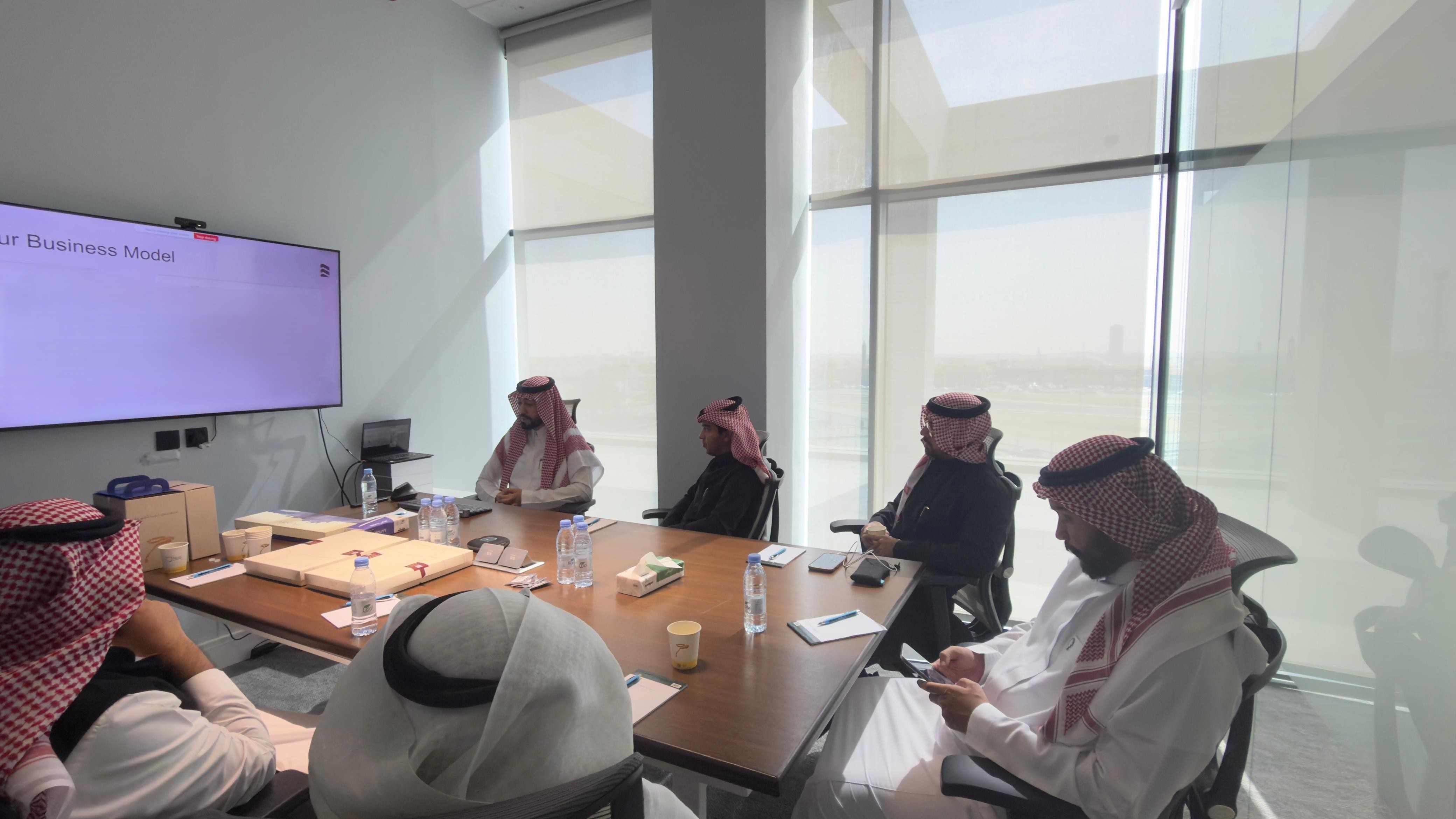
I remember they told us that by the end of the program, we had to contact 200 people about our startup. We asked, “how are we going to talk to 200 people?” They said to go to the street, go on Facebook, it doesn't matter. “Give us 200 people, or you will not pass the program.”
It feels very awkward at first. You call someone and say, hey, I have this thing. They say, who are you? You say, I am from KAUST. They say, what is KAUST? It took so long, and many led to nothing. But after 200 calls, a surprising number became good leads. I was shocked that it worked so well.
That is something I do to this day, and it is advice I give to everyone who wants to start something: give me 10 people who will agree to this. They ask, what people? I say, I don’t know, figure it out. Give me 10 people, and then we will talk. It sounds like something out of a self-help book, but it actually works.
You worked for a little over a year as a consultant. That is a path that many KGSP students and alumni take these days. What was that like, and what did you learn from your time working with a large consulting firm?
I think a lot of academics think less of consulting work. That used to be my view of consulting. I thought you are just making slides. I didn’t really think of doing consulting up until my last year at KAUST. I remember I had a friend of mine who was working at Roland Berger. We were talking about how I wasn’t sure what to do after my PhD. I wanted to use my expertise, but I wasn’t sure what to do. He said to join consulting. “Trust me, I think you are going to like it. They will need people like you who have a PhD and specialize. And if you want extra motivation, this is my salary.”
That was pretty convincing. Compared to what I was taking in at the time, I thought, okay, that is worth a try.
He gave me the name of the partner and told me to talk to her and see what she says. I talked to the partner - another cold call. She said she liked my CV and that they needed someone like me. One month later, they asked me to come work with them. They were starting their own practice in healthcare, and they needed someone who was more specialized in the field. It was that fast.
The nice thing about consulting is that you learn so much more than you think you can. You learn very quickly what the large entities and governments around the world care about, and it is nothing like what academia and small businesses care about. It is especially interesting for us in Saudi, where we have all these big projects going on. Those insights are worth having, and they give you a good perspective on how the country works in general.
Also, because you get compensated very well for it, consulting can help you build a life that allows you to do anything afterward. In that way, it is a great step toward anything else you want to do.
How did that experience with consulting lead you to where you are now?
I actually quit consulting after one year on the job, and it wasn’t to go to anything else. I just felt it was too much focus on large things and less on the details. As a researcher, I get hyper‑fixated on the small things. It is a great job if you like that kind of work and if you can handle the work hours, but for me, it’s not my thing.
At that time, my brother was starting his own company called Thabet Investment, which started a marketing agency and had recently sold a couple of clothing and food brands that he built himself. He told me that if I had nothing to do, to come to his office and use it as a base and see what I can figure out.
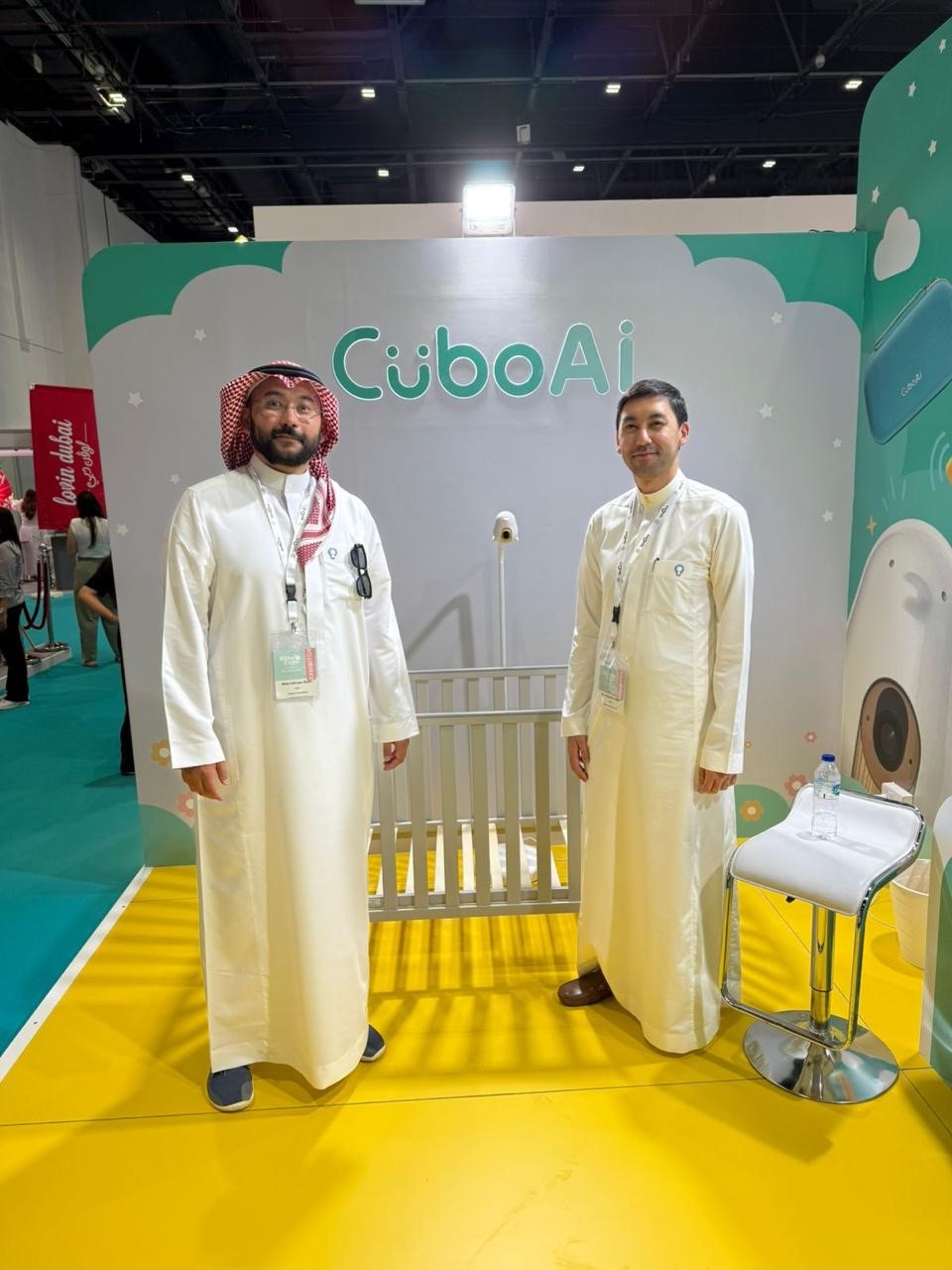
I started looking at what I could do, and eventually I started a company under it called Thabet Technologies. I then found a very interesting opportunity. I was talking to one of my friends from UCSD who became an investor in Singapore and had just had a child. He pointed me to a brand called CuboAi that makes baby monitors out of Taiwan. They use AI that can gives you notifications on your phone about what the baby is doing.
I emailed the company saying we have an investment company and a baby and diaper brand and that we would love to be their partner in the Middle East. It was great timing. They got back to me very quickly saying they were thinking of branching out to the Middle East but didn’t know how to do it. They wanted to work together and start this brand deal. CuboAi has some competition in the US, but here in Saudi we are doing quite well.
Can you tell us how you transitioned from being a CEO for one company, Thabet Technologies, to being a CEO at second company in Everbridge Capital?
While I was working on the CuboAi deal, we were having an issue with cash flow. We had stock we were selling, but I didn’t have the money for salaries, campaigns, or advertising. We couldn’t sell, so we were stuck in a loop. This is a huge issue in the Saudi market. We were a startup that had this issue, but larger companies with billions also face the same thing.
I talked with my friend from UCSD who had shown me the baby monitor brand, and I told him about the cash‑flow issue. He had worked with companies in Asia and the US doing cash‑flow solutions like invoice financing, which was the product we needed. He suggested setting up a company together to benefit people like me looking for cash‑flow solutions. I said I didn’t know if I was the best person for finance. I am a bioengineer who focuses on healthcare, and he needed a CEO and CFO. He said it was fine, that no one in Saudi was doing it at the needed level. We had the expertise, the money, and the access to launch the product.
So, we began looking at the market and exploring how to do this. After a couple of months, we had a solid case. We took it to an investment company, and they were on board immediately. They asked how much we needed. After we told them, they said they would put in 100 million dollars. That covered the startup, and all the financing needed for the next five years, along with the percentages.
That sounded like a good deal to me.
That became Everbridge Capital. It started from a small need and grew into a great opportunity we were able to start together. We started in May, and now we are in the final stages of licensing with the Saudi Arabian Monetary Authority (SAMA). We are getting very good traction with the company.
What’s on thing you know now that you wish you had known when you first started with KGSP?
Get to know as many people as you can.
Anything I achieved in my life so far was because of someone I met. If you help people, they'll help you back, and vice versa. If you have a good network of people, you can do a lot of great things. That's how it works.
As much as it's important lock yourself in your room and study, the other part needs maintenance too. Get out there and go to the events, go do weird stuff, take random classes. You never know when that might help you in the future.

STUDENT PROFILE
KGSP students represent the Kingdom of Saudi Arabia’s future scientists, engineers, entrepreneurs, and thought-leaders. As both individuals and as a community, they reflect the KAUST mission of driving scientific discovery through excellence in education and cutting-edge research, and share a commitment to fostering innovation, economic development, and social prosperity throughout the Kingdom and the world.

ADMISSIONS REQUIREMENTS
Selection to the KGSP is extremely competitive, and currently by invitation only. Successful applicants are Saudi Arabian students in their final year of high school who demonstrate impressive academic credentials within STEM fields, meaningful extra-curricular achievements, and who share the KAUST ethos of continuous discovery. Learn more here.

KGSP ADMINISTRATION
The KGSP is administered by KAUST Academy under the leadership of Dr. Sultan Al-Barakati. KAUST Academy is mandated by KAUST to support the acceleration of Saudi Arabia's knowledge-based economy by providing world class training programs in emerging technologies aligned with Vision 2030. KAUST Academy crafts these unique learning interventions by exporting the intellectual DNA acquired by KAUST for the benefit of the entire Kingdom.
—King Abdullah bin Abdulaziz al Saud
1924 – 2015