Overview
The KGSP alumni network spans over 450 alumni total. With majority of KGSP students matriculating to KAUST following their undergraduate studies, the Program's Alumni Council and Lead works to facilitate and maintain connections between the alumni body.



Meet our current council leadership and stay connected for upcoming meetings and events.
Update your contact information for the to keep in touch on the most up-to-date announcements.
Have a job post to share or currently job hunting? Submit job postings or browse current openings on our job board.
Alumni News
Alumni Profile: Wjdan Alharthi
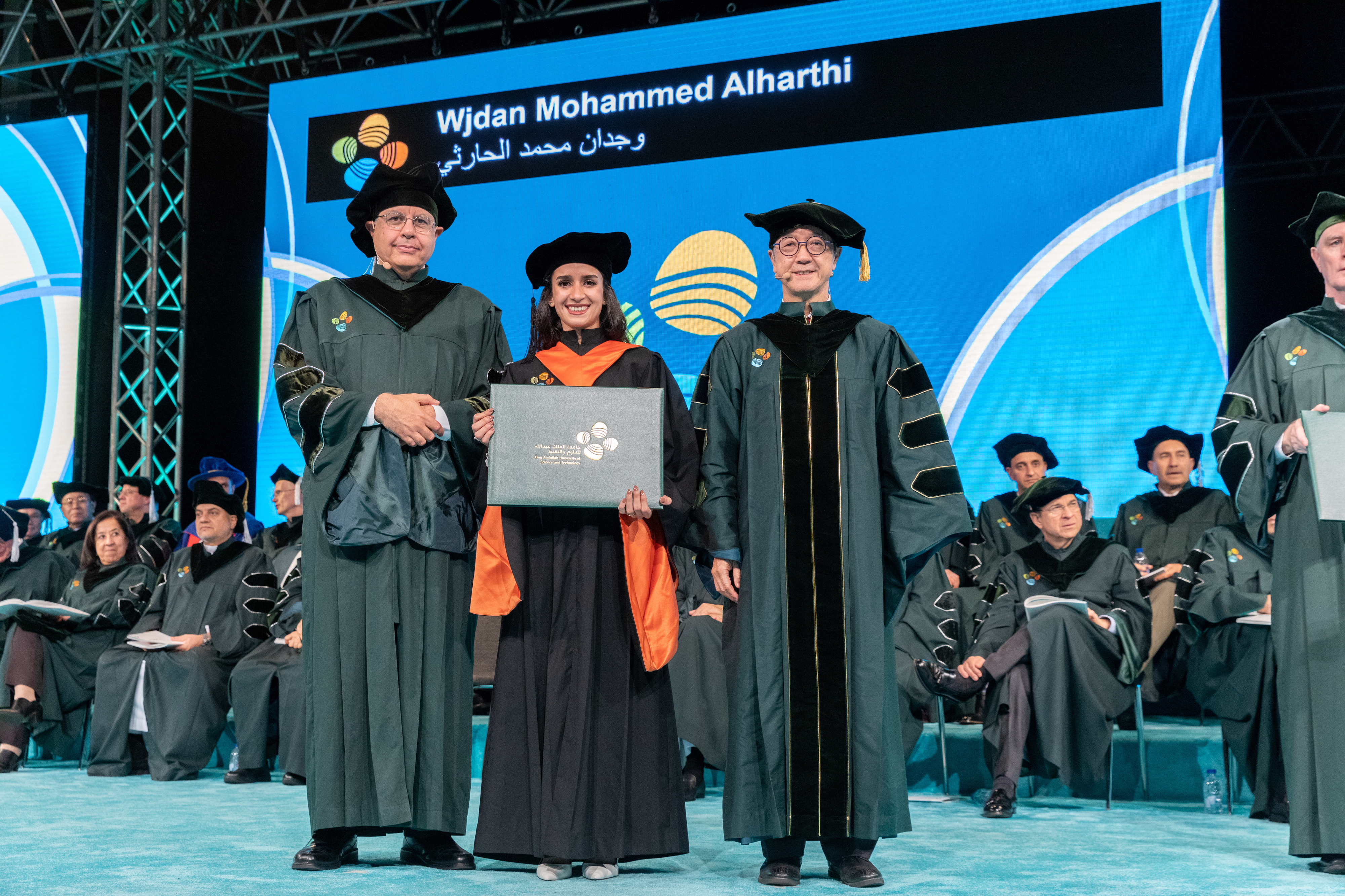
In our ongoing series of KGSP Alumni Profiles, we spotlight Wjdan Alharthi from KGSP's 4th cohort. Wjdan's path to the KGSP began with a Mathematics Olympiad and a high school robotics team, and it carried her through an ESL year at the University of Illinois Urbana-Champaign, a Foundation Year at the University of Pennsylvania, internships at Microsoft, and a master's degree in Computer Science at KAUST with a focus on applied machine learning. Along the way, she was selected to present her work to a delegation that included the Crown Prince during his visit to the United States. Today, Wjdan is an Advisory AI Solution Architect at IBM Middle East and Africa,, where she continues to build on a field she first discovered almost by chance, as a single elective in her third year of college.
Can you tell us about your background and what you were like as a high school student?
I attended Al-Thanawiyah Al-Rabi'ah in Riyadh, a school that was very supportive of extracurricular activities. Alongside my coursework, I spent a lot of time on my own exploring the programming world, I was very into the technical side of things.
I was in the Mathematics Olympiad for a while, and then the Chemistry Olympiad, through Mawhiba, so I was on that track since middle school. In high school, our school participated in the FIRST LEGO League through the Talent Center for the first time. Having previously participated in robotics through Mawhiba, I became one of the team's student mentors, helping them build robots for competition and preparing them for the regional round. We placed sixth out of 30 teams.
Looking back, a lot of my time outside the classroom revolved around STEM activities. Those experiences sparked my interest in technology early on and ultimately shaped the direction I took in college and beyond.
How did you find out about the KGSP, and how did you decide to join the Program?
It was different from how it works today, but back then admission was by invitation. Since I was on the Mawhiba track, I was one of the students invited to apply. I went through the process, including an interview at KAUST, and I was accepted. I also applied to and was accepted into the Aramco college scholarship program, but I decided to go with the KGSP instead.
I did the full experience: an ESL year at the University of Illinois Urbana-Champaign (UIUC), followed by a Foundation Year at the University of Pennsylvania, before joining Boston University as an undergraduate.
You completed both an ESL year and a Foundation Year, programs that are no longer offered by the KGSP. How did participating in those pre-college years in the United States impact your journey?
For me personally, both were essential. Coming from the Saudi school system back then, the ESL year was important not only for the language preparation itself, but also for the transition of moving to the US as a 17-year-old and adjusting before starting an undergraduate program. Together, the ESL and Foundation Year also helped me transition academically by studying subjects like physics, chemistry, and mathematics in English after originally learning them in Arabic. That shift in thinking made a real difference once I started my degree.
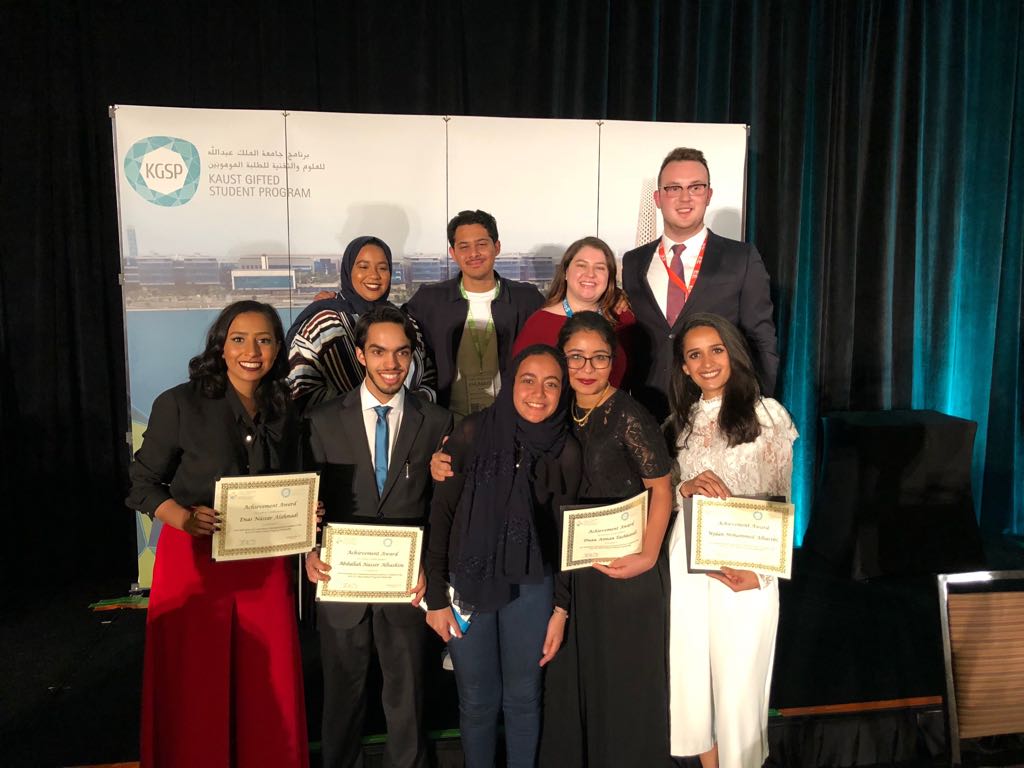
Those two years also gave me opportunities outside the classroom. During my ESL year at the University of Illinois Urbana-Champaign, I volunteered as a teaching assistant for a LEGO club at the Orpheum Children's Science Museum. During my Foundation Year at the University of Pennsylvania, I continued mentoring students through the Franklin Institute's PACTS (Partnerships for Achieving Careers in Technology and Science) program and also volunteered as a referee for a statewide FIRST LEGO League competition hosted at Penn. It was a nice continuation of the robotics experiences I'd had in high school.
Even though the two years were technically gap years, I never looked at them that way and never regretted it.
Describe your time at Boston University and how you decided on your academic path.
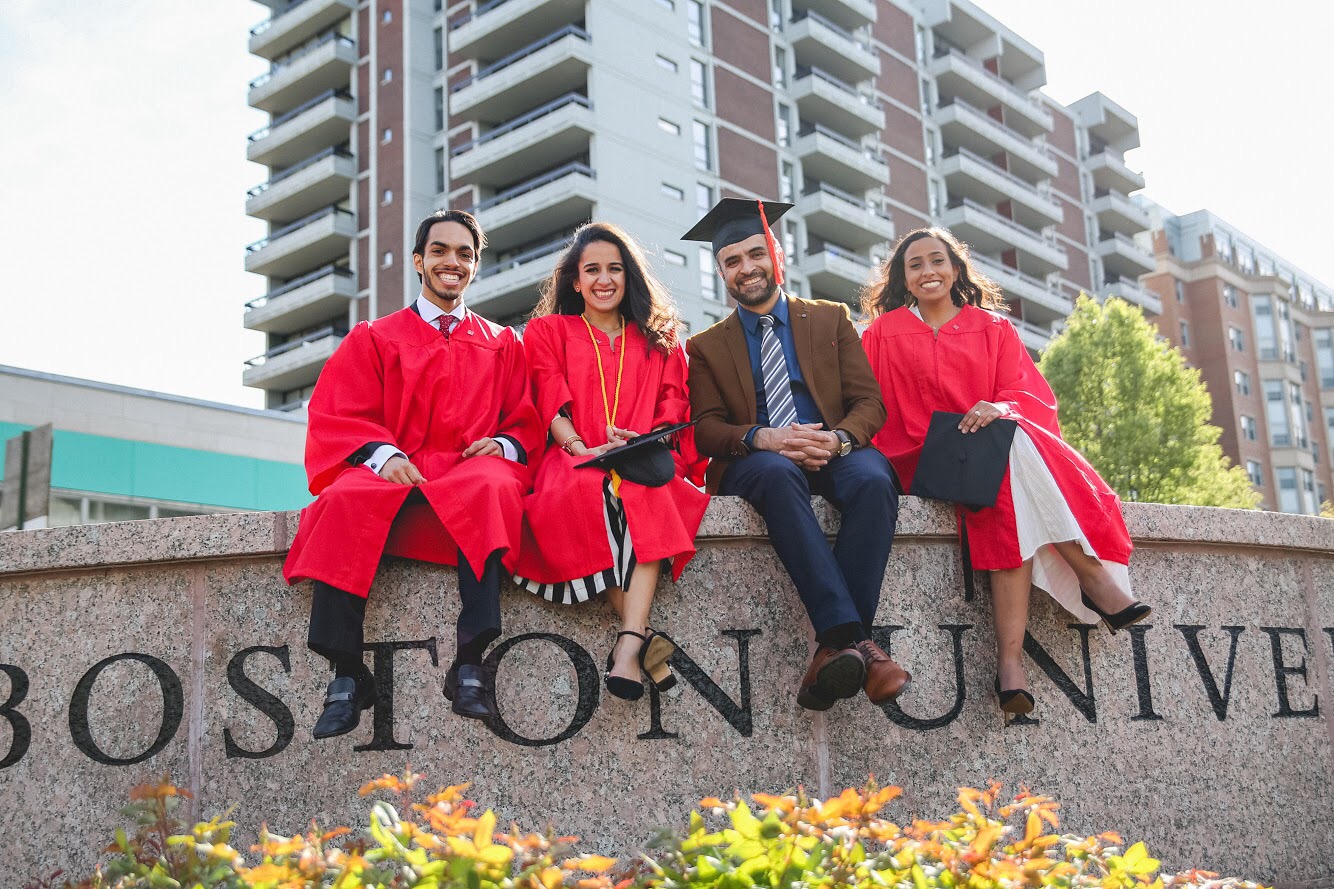
I joined BU as a Computer Science student and followed the set curriculum in my first year, then added more electives as I went. Halfway through, I decided to add a minor in Mathematics, since it had always been a passion of mine. Starting in my second year, I also served as a course assistant for the university's first- and second-year computer science courses, a role I held for three years.
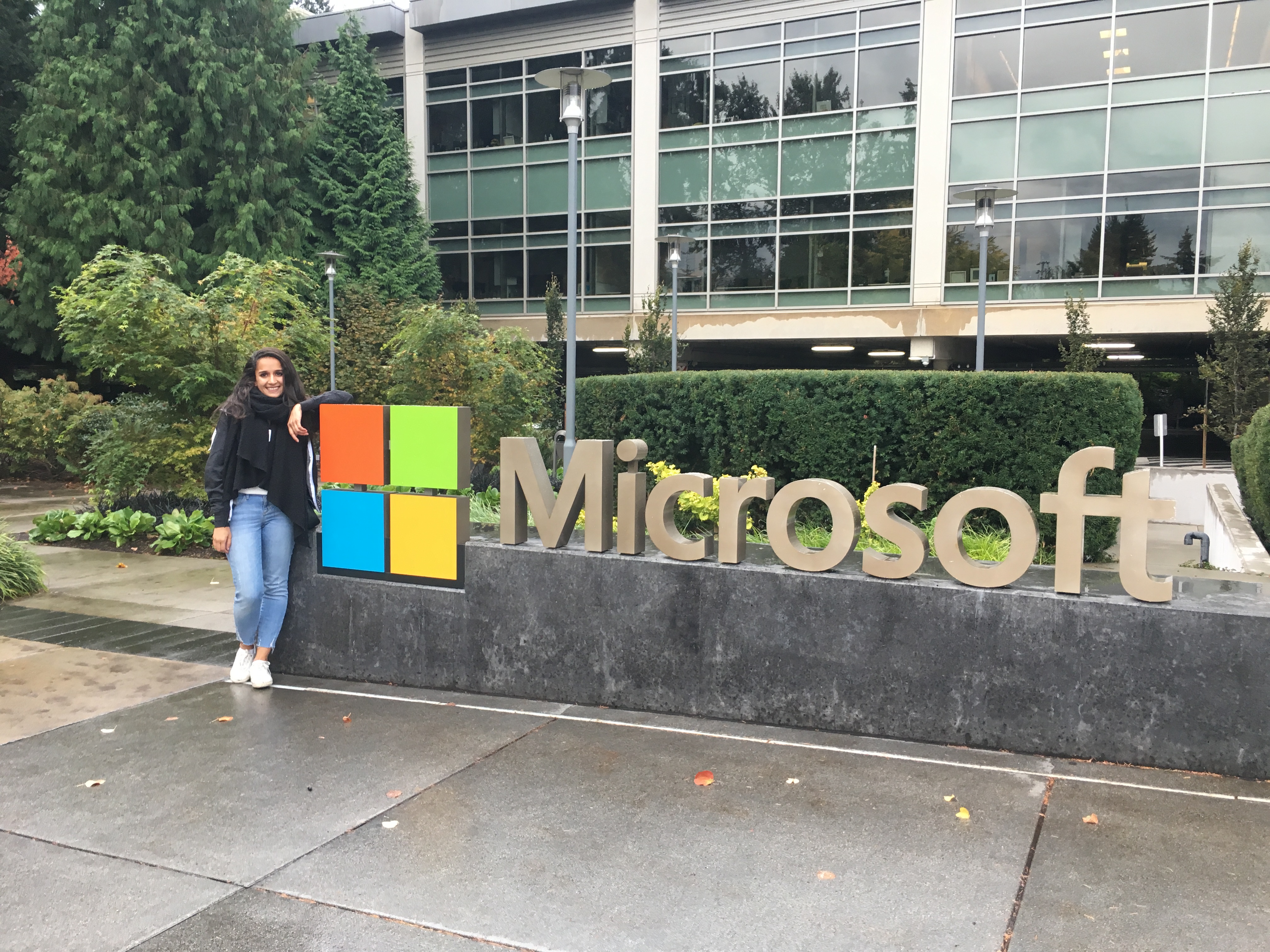
During my summers, I moved from taking courses to working in industry. My first internship was with a research group on campus building a research cloud service, a collaboration between BU, Harvard, Northeastern, and several other universities in the Boston area. That project ran for about six months, starting as a summer internship and continuing into my third year. After that, I interned with Microsoft, first in their Cambridge, Massachusetts office, and later at their Seattle headquarters.
I returned to Microsoft for a third internship during my master's at KAUST. After the internship, I was offered a full-time position, but I decided to stay in Saudi Arabia rather than return to Microsoft.
As an undergraduate, you were nominated to present your internship experience to a delegation that included the Crown Prince during his visit to the United States. What was preparing for that like?
It all came together within about a week. As part of the Innovation 2 Impact (i2i) event, a group of Saudi students was selected from universities across the United States and the late Dr. Najah supported the inclusion of KGSP students, and I was one of the two selected.
What I ended up presenting was from my first Microsoft internship, where our team built Ink to Code, an application published on the Windows Store that allowed developers to sketch a mobile app interface on a tablet and have it translated automatically into working code they could import into their development environment. It was an early use of the kind of AI-assisted design translation that's far more common today.
You returned to KAUST for your master's degree. What was that like, and how did it compare to your undergraduate experience at BU?
I returned to KAUST because I wanted to deepen my understanding of machine learning from an applied perspective. During my first month at KAUST, I went to the office of the late Professor Vladimir Bajic, whose research focused on artificial intelligence and machine learning for biomedical discovery. I told him I wanted to get deeper into machine learning, but in an applied, project-based way rather than a purely theoretical one. We discussed a few ideas, and I worked with him on one of them through to graduation.
Compared to BU, there was still a curriculum and required coursework, so that part felt similar. But there was an added layer of independence: researching and selecting your own project, and steering it toward a goal, that I hadn't fully experienced as an undergraduate, since most of my summers were spent in industry rather than in research.
You're now an Advisory AI Solution Architect at IBM, working in a field that wasn't yet well established when you began your undergraduate degree. How did you find yourself working in machine learning?
My master's degree played the biggest role. My first exposure to data science and machine learning was actually just one elective in my third year of undergrad, back when there wasn't a dedicated major or curriculum for it the way there is at most universities today. It was just computer science, and you built your specialization through the electives you chose.
During undergrad, I worked closely with Professor Mootaz Elnozahy. Every semester, I would send him my planned course list and ask what he thought. He always encouraged me to take a wide range of electives so I could broaden my knowledge across different areas of computer science. I went back to him for advice throughout my internships too, including when I was weighing offers from Microsoft against offers from startups. He's remained an insightful, welcoming mentor.
When that undergraduate elective stuck with me, I chose to pursue machine learning more seriously in my master's, which is what led me to Professor Vladimir Bajic's office and, from there, to where I am today.
Everyone seems to have strong opinions about the role of artificial intelligence in society and the workplace. What's your perspective on the role AI will play in Saudi Arabia, now and in the future?
There's a version of AI in the headlines that suggests it's taking over everything. While some roles have certainly been affected, I think the bigger story is that most jobs are evolving rather than disappearing. AI is changing how people work more than replacing people altogether.
How AI transforms Saudi Arabia will look different depending on the organization. In a startup, AI can help build capabilities very quickly with relatively few resources. As organizations grow, however, deploying AI responsibly becomes more complex. Success depends not only on the technology itself, but also on governance, data quality, security, and having people in the loop.
For now, I think AI's biggest impact will be increasing productivity, making knowledge more accessible, and enabling people and organizations to focus on higher-value work rather than routine tasks.
What advice do you have for current KGSP students, particularly when it comes to using AI responsibly?
Use AI, but don't over-rely on it. In the educational system, students are discouraged from using it, and for good reason. I've spoken with professors who feel like it's become harder to teach, because students lean on it immediately instead of engaging with the material. But remember that you will use AI in the workplace, where it's raising the floor for everyone, from high performers to low performers, so you do need to stay current with it.
The key is to use it mindfully. Don't outsource your thinking, or the decisions you should be the one making. The moment you start outsourcing something, that part of your brain switches off, and if you let even simple decisions get outsourced to AI, you weaken your own judgment over time and risk becoming little more than an AI operator, a role anyone can fill. Use AI for what it's genuinely faster at, but your own judgment, intuition, and the other human factors are what you need to keep developing. Frankly, that's already one of the qualities the KGSP selects for in its students, so it's a strength to build on, not to hand over.
What general advice would you give to current KGSP students?
One thing I still think about is defining your own success equation, or what your scorecard looks like. The KGSP is a competitive environment, and for years, the educational system gives you a fairly clear, set path with defined metrics for success. But once you move into the workplace and leave that structured environment, you have to start setting your own metrics for your professional life, your personal life, your relationships, all of it.
Every path from there will look different. It's not linear the way school is, where everyone more or less knows what's coming next. Understanding what actually matters to you, and building your own scorecard around that, makes a real difference once you're on your own.
What is your greatest hope for the future of the KGSP community?
One of the things I've been happiest to see is the growth of the KGSP alumni community. The network has become much more established over the years, creating more opportunities for alumni to stay connected, support one another, and give back to the community. I hope that continues because I think it strengthens the Program long after students graduate.
I know the ESL and Foundation Year have been phased out, and I think that does leave a bit of a gap for students. But I also know the Program is now starting to work with students earlier, at the high school level, which is a way of preparing them for the scholarship experience well before they arrive. I don't know the specifics of that program, but I like that the KGSP is starting earlier. That's one of the changes I see as a real positive.